
Client profile
Liri produces a wide range of confectionery products, including biscuits, wafers, and chocolates, for markets across Europe and the Balkans.
As a high-volume manufacturer, the company relies on efficient production, packaging, and distribution processes to meet customer demand. Ensuring that the right products are loaded into each delivery truck is essential for reliable warehouse operations.
To support this process, Hamatics developed and deployed a custom computer vision solution for automated package verification during warehouse dispatch.
The Problem
During warehouse dispatch, the loading of goods into delivery trucks relied on manual checks based on paper invoices. With hundreds of invoices processed daily, this approach created a risk of human error. Workers could accidentally mix up products between orders, load incorrect quantities, or miss required items entirely.
Such discrepancies can lead to additional verification work, shipment delays, inventory inconsistencies, and challenges in maintaining reliable delivery operations.
The warehouse needed a solution that could help workers verify packages against the correct invoice while creating a more consistent and traceable dispatch process.
The Solution: SmartScan
SmartScan was designed as an AI-powered computer vision solution for automating package verification and improving warehouse loading accuracy.
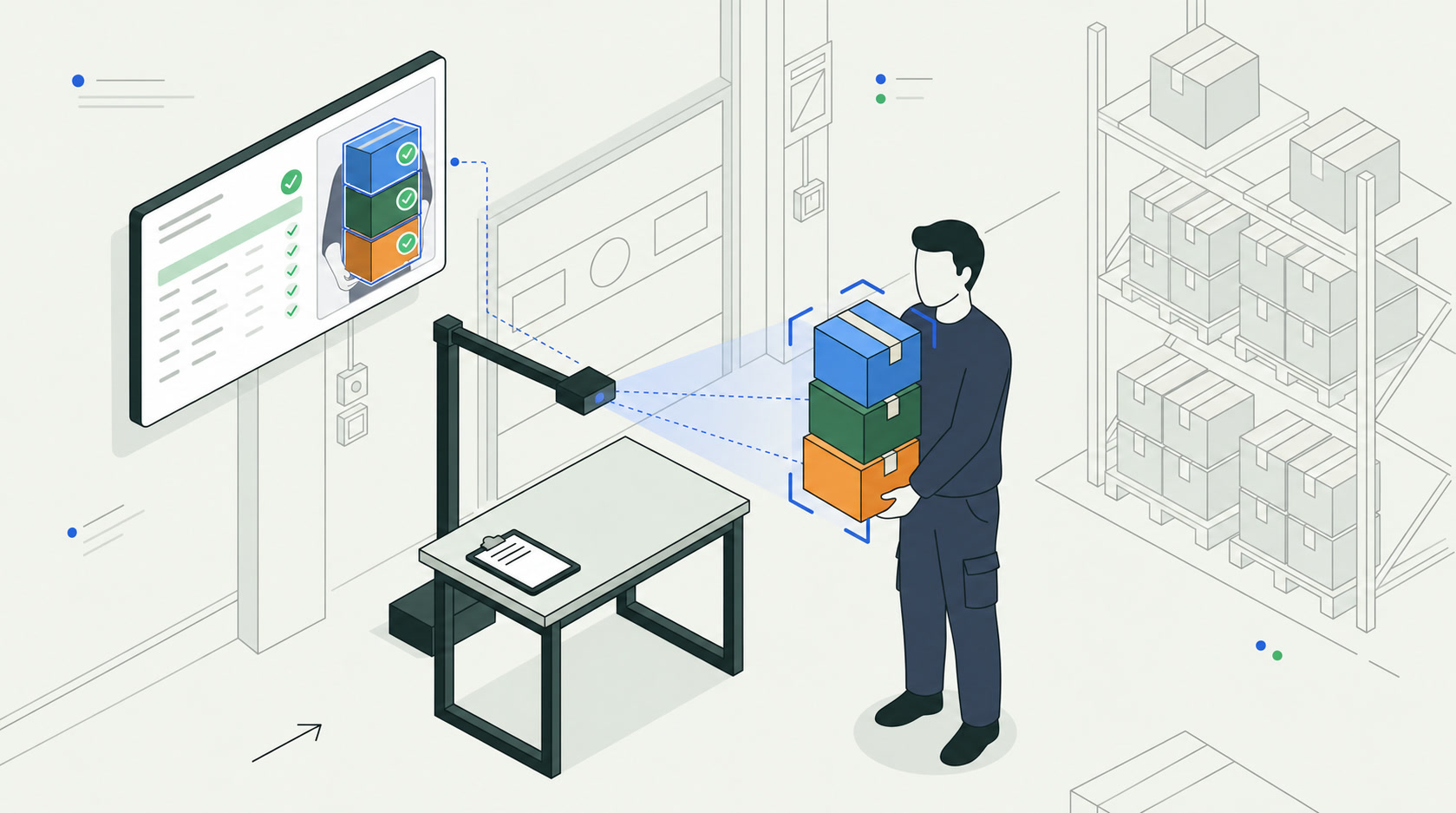
Industrial cameras capture the packages, while an AI computer vision model running on an edge device recognizes them in the camera images. The workflow checks the scanned products and quantities against the active invoice before loading.
AI-Powered Package Recognition
When a worker presents packages to the industrial camera, the AI model analyzes the images to recognize the packages being scanned. This brings automated package recognition directly into the warehouse loading process.
Each scan is evaluated against the invoice selected in the dashboard. This keeps the verification process linked to the correct order and checks each package against the required products and quantities.
Real-Time Invoice Matching
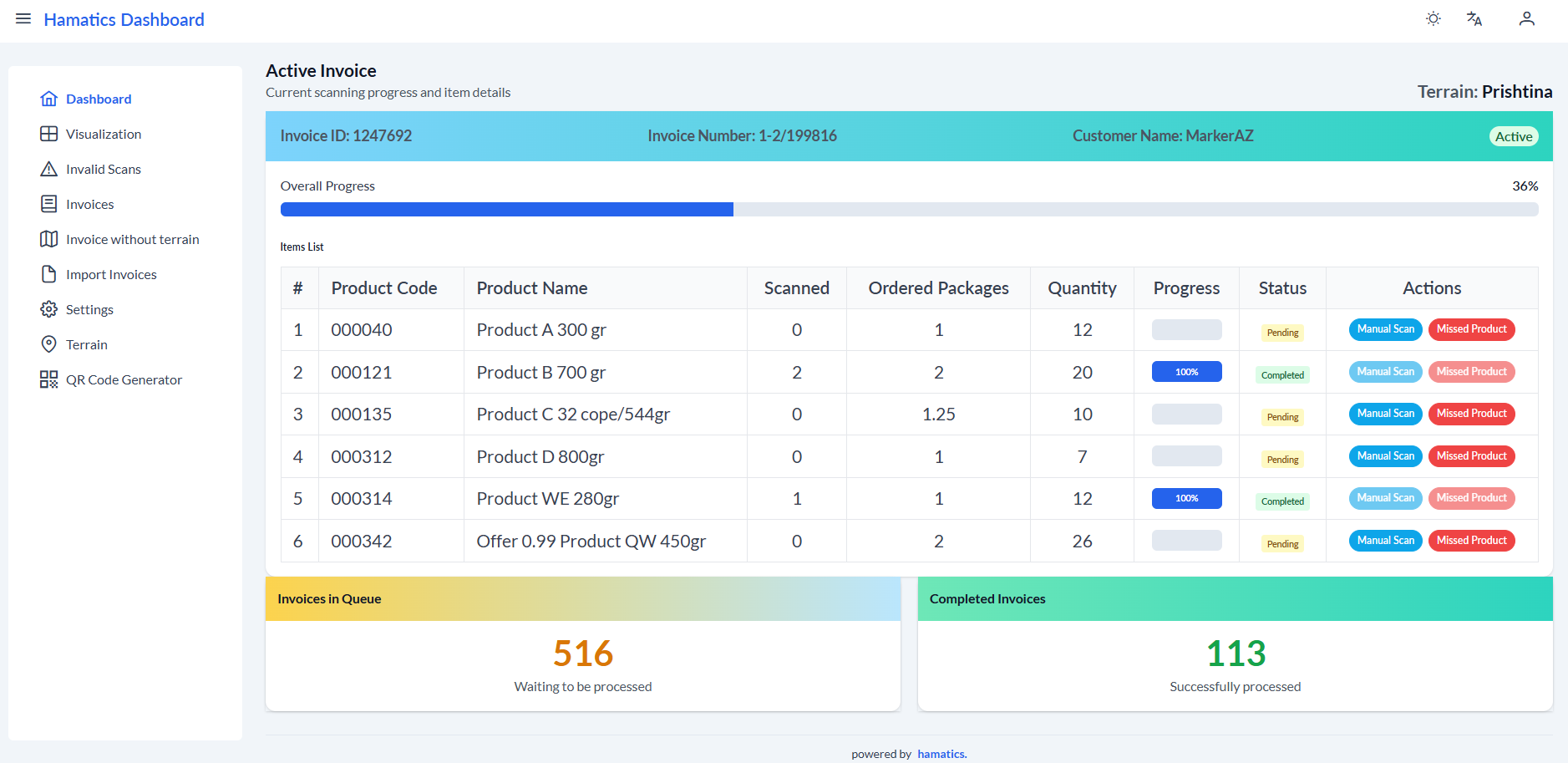
The system compares the scanned products and quantities with the items required by the active invoice. Each valid scan updates the matching item's progress.
If a scanned product does not match the invoice or exceeds the required quantity, the dashboard flags the discrepancy. Invalid scans are recorded for review and do not advance invoice progress.
Live Invoice Progress
The dashboard shows the invoice currently being scanned, its overall progress, and the required and scanned quantities for each product. Workers can see which items are complete and which still need attention, alongside the queued and completed invoice totals.
When the required quantities are reached, the invoice is marked complete and the next queued invoice becomes active.
See SmartScan in action
Watch a real example of AI package verification in use during warehouse dispatch.
Results: Traceable and Verifiable Dispatch Operations
Beyond real-time package verification, the system records the scanning activity associated with each invoice, including both valid and invalid scans.
Invoice History and Scan Review
The visualization page lists scanned invoices with their status and scan summaries. Users can filter the list by date, open an invoice's scan details, and review screenshots of valid and invalid scans to investigate discrepancies.
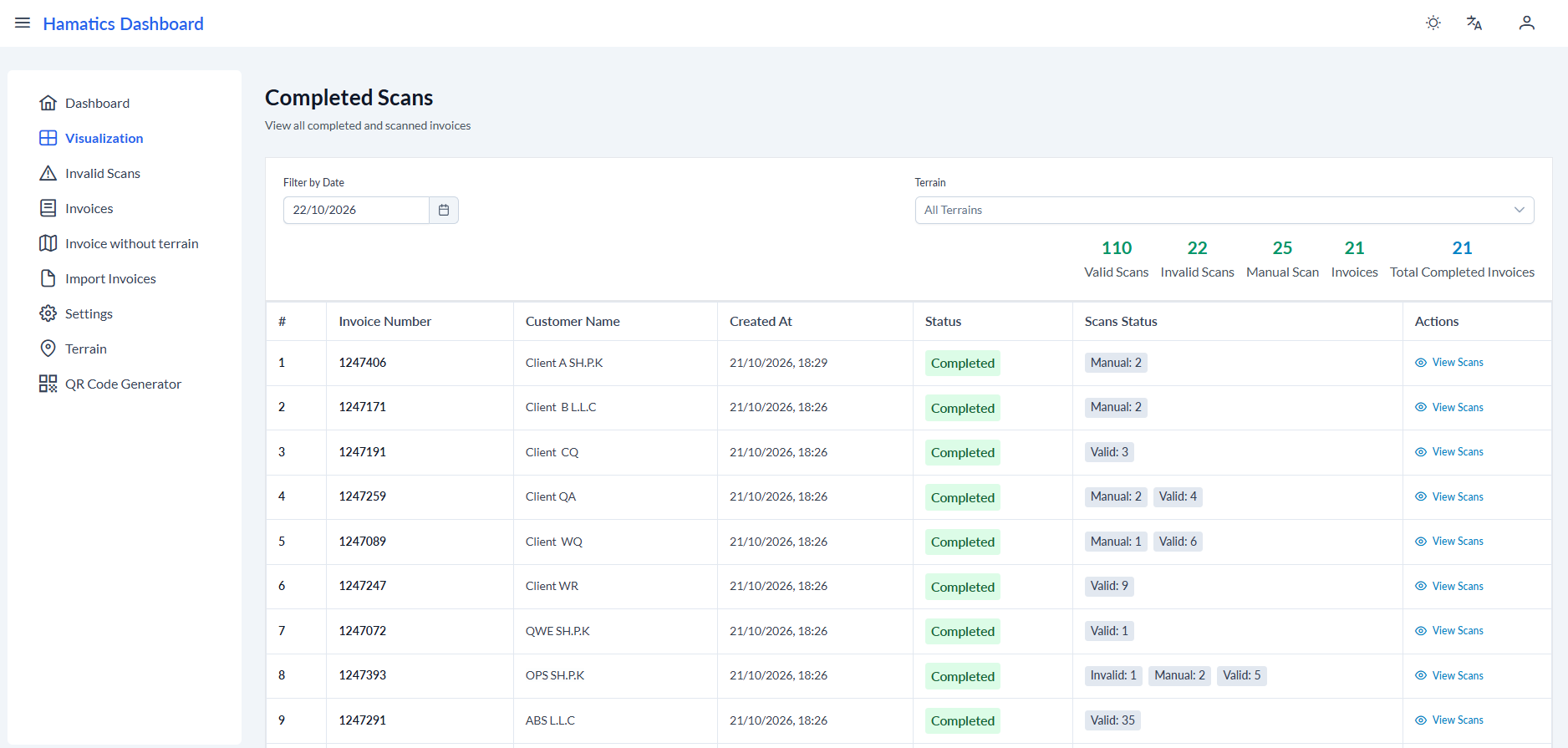
For example, if a question arises later about a particular invoice, the team can open its details and examine the associated scans and screenshots. Instead of relying solely on recollection or manual records, they have a documented record of what the camera captured during the verification process.
Recording both successful and unsuccessful scans is an important part of this approach. It provides a more complete overview of the scanning activity, helping the team understand not only where issues occurred but also which verifications were completed as expected.
Through automated package verification and scan traceability, the project improves dispatch accuracy, strengthens operational oversight, and builds greater confidence in the outgoing shipment process.
Conclusion
This case study shows how computer vision can support a practical challenge in industrial operations. By connecting AI package recognition, invoice-based validation, and visual scan records, Hamatics helps businesses introduce greater consistency and traceability into their workflows.
The solution brings automated verification directly into the warehouse dispatch process, supporting workers during loading and providing a digital record that can be reviewed when needed.
The practical difference
AI package recognition with live invoice progress, invoice-linked scan records, and visual evidence.